Weak or manual product recommendations
A bigger basket beats a deeper discount
Maestra Platform grows order value through relevance rather than price, an all-in-one retention marketing platform for ecommerce brands, with a forward-deployed marketer running the tests.
Brands running on Maestra






The problem
Your recommendation widget doesn't know what it's looking at
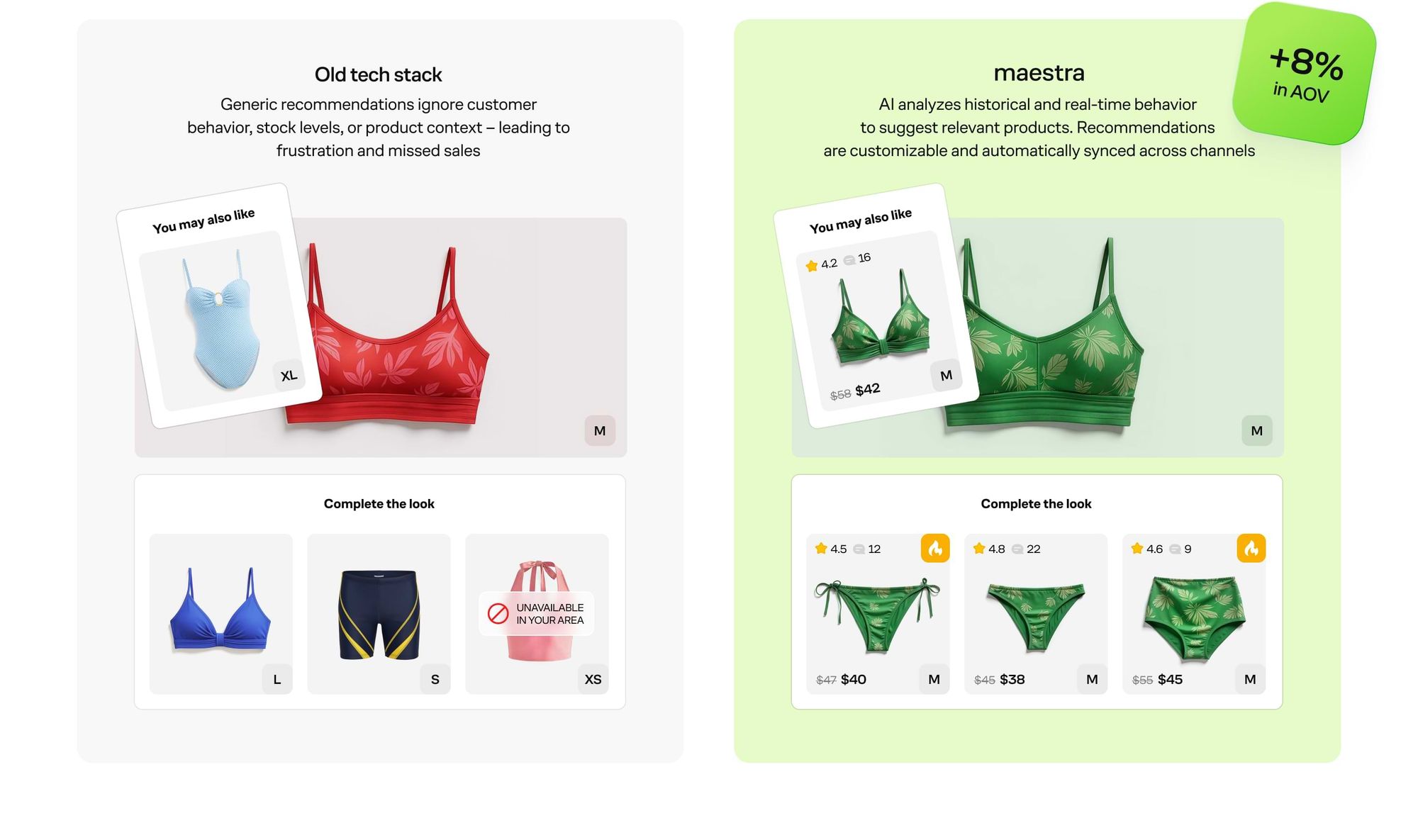
Basic "you might also like" widgets show the same popular items to everyone, regardless of what a customer is actually viewing. When the engine can't read product attributes like color, size, or material, it recommends the wrong variant, the wrong fit, or an item that's already out of stock.
What we hear from brands
an ethically sourced jewelry brand needs better website and email personalization to lift conversions and cross-sell new jewelry lines
a leather handbag brand says its current product recommendations are static and not predictive
a premium womenswear brand calls its merchandising functionality damagingly bad, relying on manual picks instead of algorithmic intelligence
The new way
When browsing isn't enough, ask the customer directly
Product-picking quizzes cure decision fatigue by asking a few short questions and surfacing matching products immediately, while capturing preferences that sharpen targeting across every channel. Pair that with value-packed bundles built from products that actually go together, and discovery stops depending on the customer getting lucky.
Outcomes brands report
Customer proof
Sixteen colors of one dress is not a recommendation

The previous widget treated every variant as a separate product and filled itself with the same item. Understanding variants freed the slots for things the shopper had not seen.
 Read the full case study
+34.9%
more items in the average basket
How it works
The switch, from the marketing team's side
Week one
You agree the roadmap and grant access. Nothing changes for your customers.
The weeks after
Your marketer migrates data, warms domains, and rebuilds the programs while your current campaigns keep going out.
Launch week
Sending moves over channel by channel, and the old tools stay available until you decide you are done with them.
The platform
Where the customer profile actually comes from
Store events, order data, campaign response, and site behavior write into the same record, with cleansing and error monitoring built in rather than bolted on afterwards.
Your forward-deployed marketer
Deliverability is somebody's job here
Domains, sender signatures, and Postmaster are configured at migration and watched afterwards, with inbox placement treated as a metric rather than a complaint to answer.
Domains, signatures, and Postmaster configured for you
Email health monitored, not just reported
Warm-up handled during migration
Replace your stack
One vendor to hold accountable
When email, the website, and the recommendations belong to three companies, a problem that spans them belongs to nobody. One platform makes the answer somebody's responsibility.
Replaces
Bloomreach
Attentive
Nosto
Optimizely
Sendlane
Read the cases before you read a pitch
The brands on the site describe what they switched from and what changed afterwards, in their own numbers.